Recovery beats prevention: make coming back small
You can't stop every learner from having a bad week. You can make the way back short enough that they take it.
In this article
Every cohort has bad weeks Link to “Every cohort has bad weeks”
Illness, a deadline at work, a family week. No amount of engagement design prevents all of it, and a program that treats every missed week as failure loses people who were only ever a few days from getting back on track.
So the question worth designing for isn't only "how do we stop learners falling behind?" It's "when they do, how short is the way back?"
The size of the return path decides Link to “The size of the return path decides”
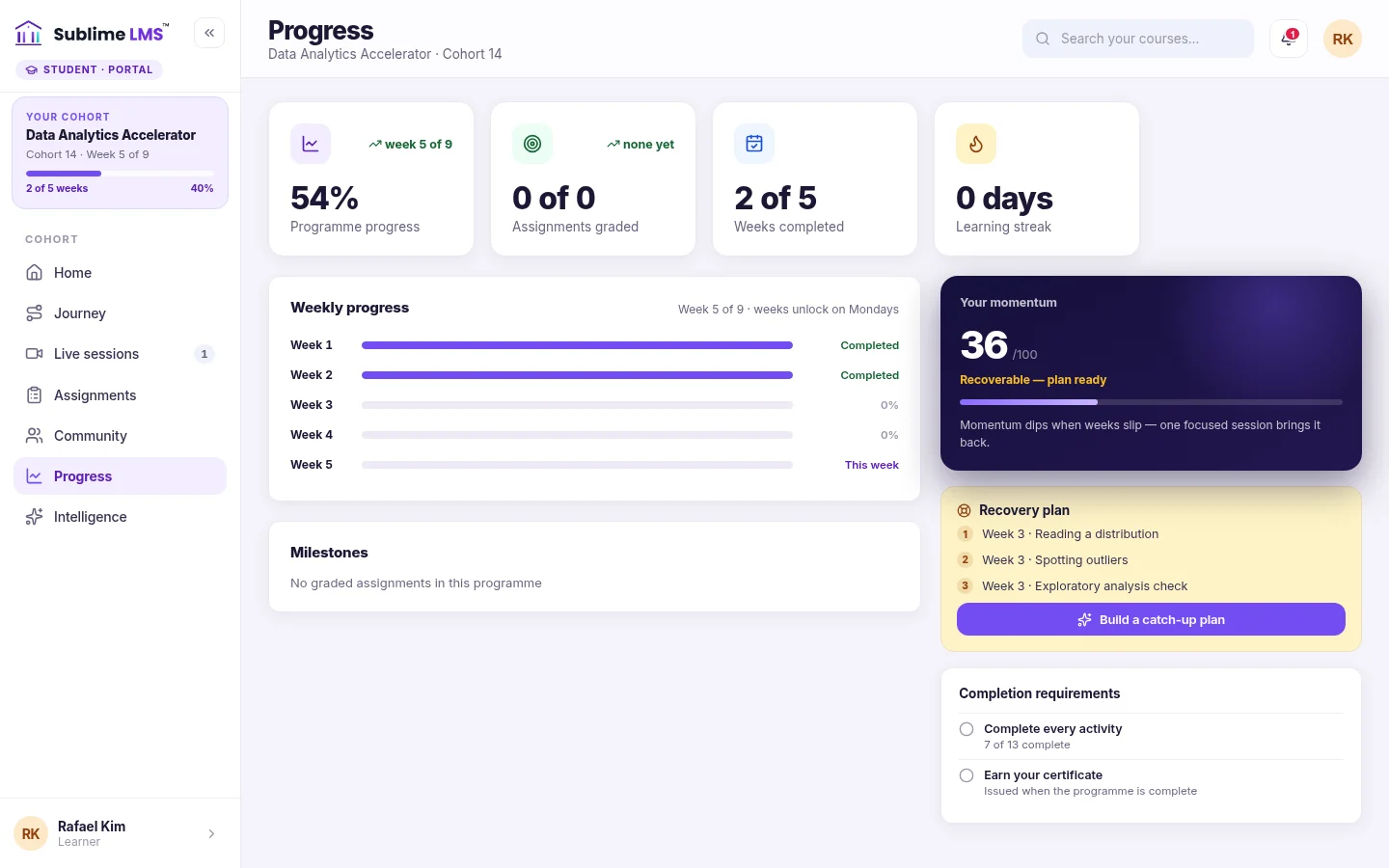
The instinct is to tell a learner everything they've missed. That's accurate, and it's exactly what makes them quit: a long list reads as proof that they're too far behind. A useful return path is ordered, finite and starts with the next small thing.
“You're a little behind” is a very different message from “here is everything you missed.”
This is how the cohort portal in Sublime LMS talks to a learner who is behind. Their home says they're a little behind and that it's recoverable this week. Their Progress page adds a recovery plan: the activities still open from earlier weeks, in course order, earliest first. Because it's built from their own open work, it stays accurate as they finish things, and nobody has to write it by hand.
Related feature: Cohort learning
Recovery is often a second attempt Link to “Recovery is often a second attempt”
Getting back on track isn't always about catching up. Often it means redoing something, and the program should make that normal rather than a penalty:
- An instructor can return an assignment for revision with feedback. The learner starts a new attempt and earlier attempts are kept.
- Where a course allows retakes, a learner can retake a quiz within its attempt limit, and sees how many attempts are left before they start.
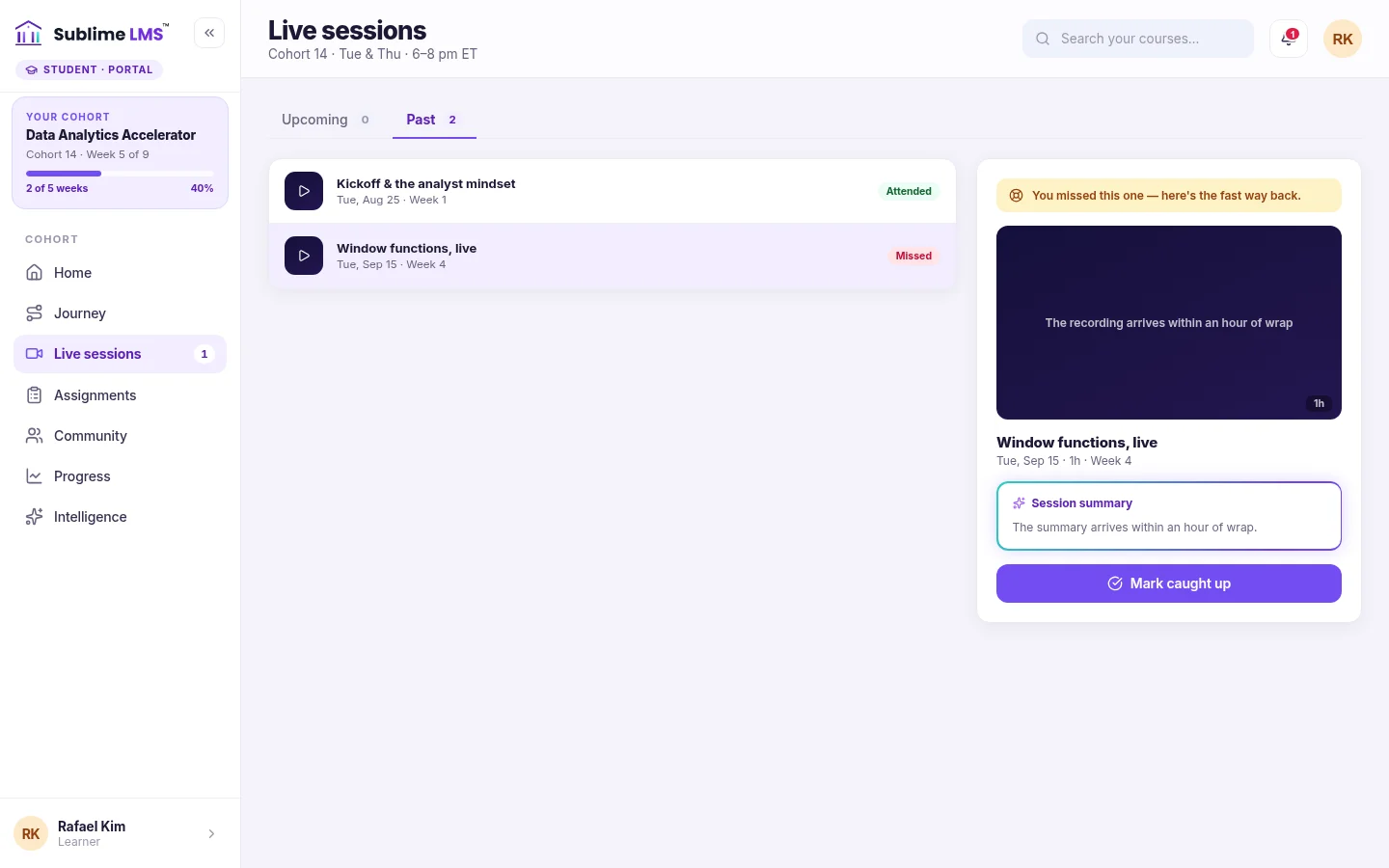
- A missed live session keeps its recording on the learner's Live sessions page, and they can mark it caught up once they've watched it.
Related feature: Recovery workflows
Make it a weekly habit, not an emergency Link to “Make it a weekly habit, not an emergency”
Recovery works best when it's routine: a few minutes each week looking at who is behind and why, and one specific message to each. Programs that only look when completion numbers disappoint are looking months too late.
Related articles
-
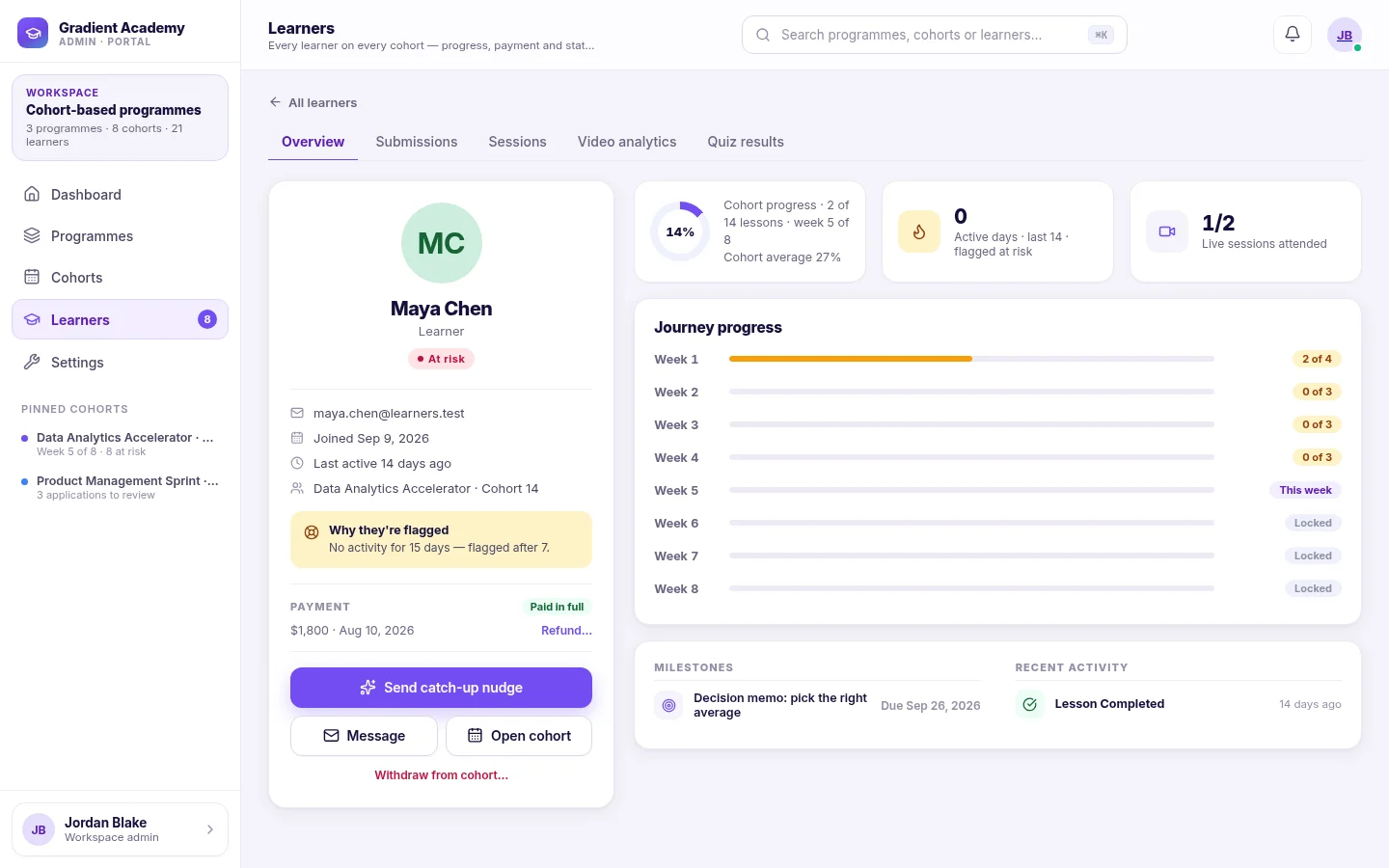
What “at risk” should mean in a cohort program
A risk flag is only useful if everyone agrees what it means and what happens next. Why a plain, explainable definition beats a clever score. 3 min read -
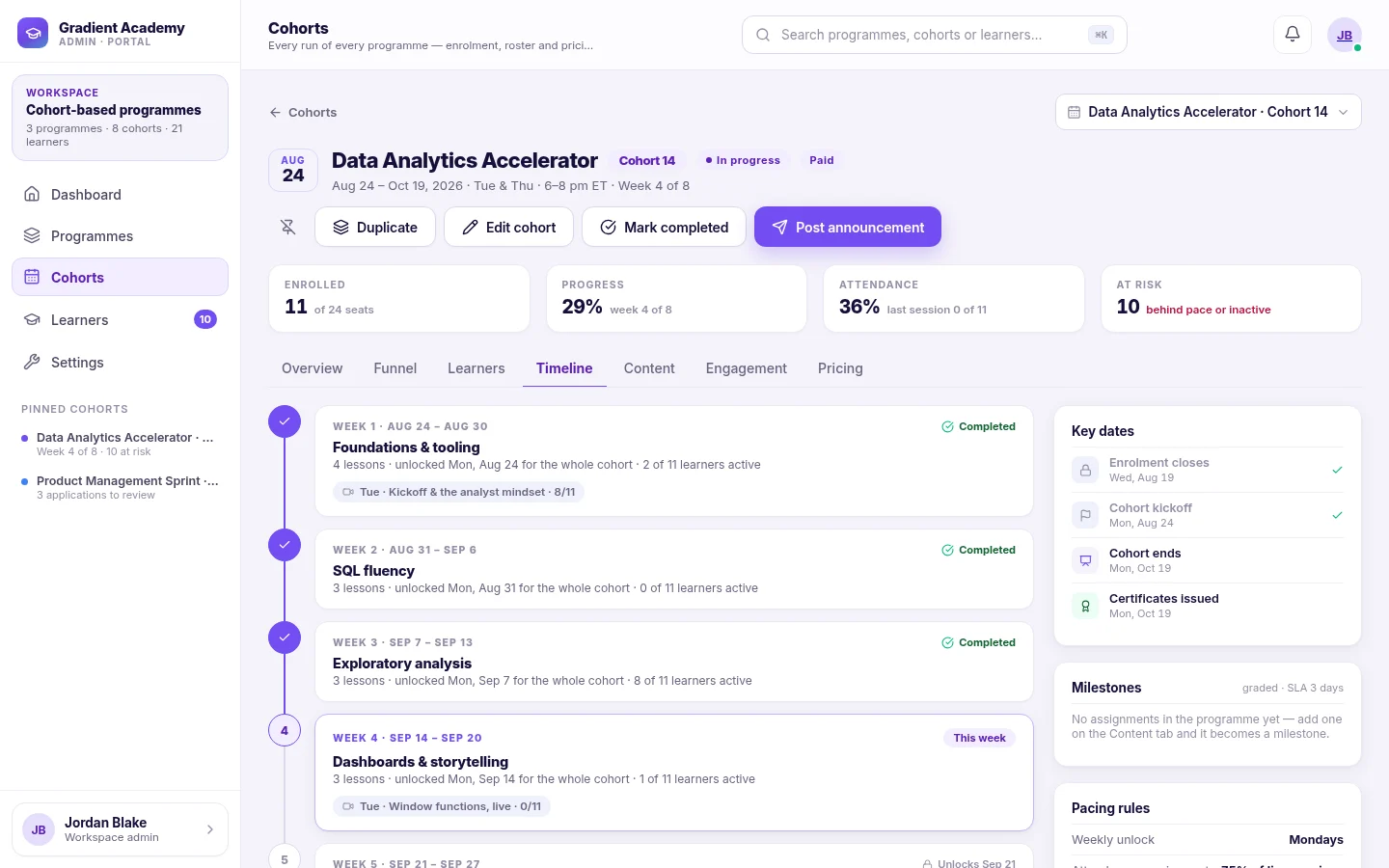
The case for a shared schedule
Flexibility sounds kind. For many learners, a schedule they share with a group is what turns "someday" into "this week". 2 min read -
Designing a cohort learners want to show up for
Content gets learners to enroll. The week-to-week experience of the group is what keeps them coming back. 2 min read