Designing a cohort learners want to show up for
Content gets learners to enroll. The week-to-week experience of the group is what keeps them coming back.
In this article
Attendance is a design problem Link to “Attendance is a design problem”
When learners stop turning up, the usual response is more reminders. Reminders help people who forgot. They don't help someone who has decided the session isn't worth their evening. That's a design question: what does this learner get from showing up that they can't get from the material alone?
Make each week feel like a week Link to “Make each week feel like a week”
A cohort has a rhythm when every week has a clear start, a clear piece of work and a moment where the group comes together. In practice that often means:
- A short announcement when the week opens, saying what it's for and what to do first.
- One live session per week at a predictable time, tied to that week's material.
- A discussion prompt learners can answer from their own work, not just a quiz on the reading.
People return to a group that noticed they were there.
Related feature: Cohort learning
Missing one shouldn't mean missing out Link to “Missing one shouldn't mean missing out”
Live sessions are where a cohort feels like a cohort, and they're also the easiest thing to miss. If missing one makes the next feel awkward, a single bad week turns into a lost learner.
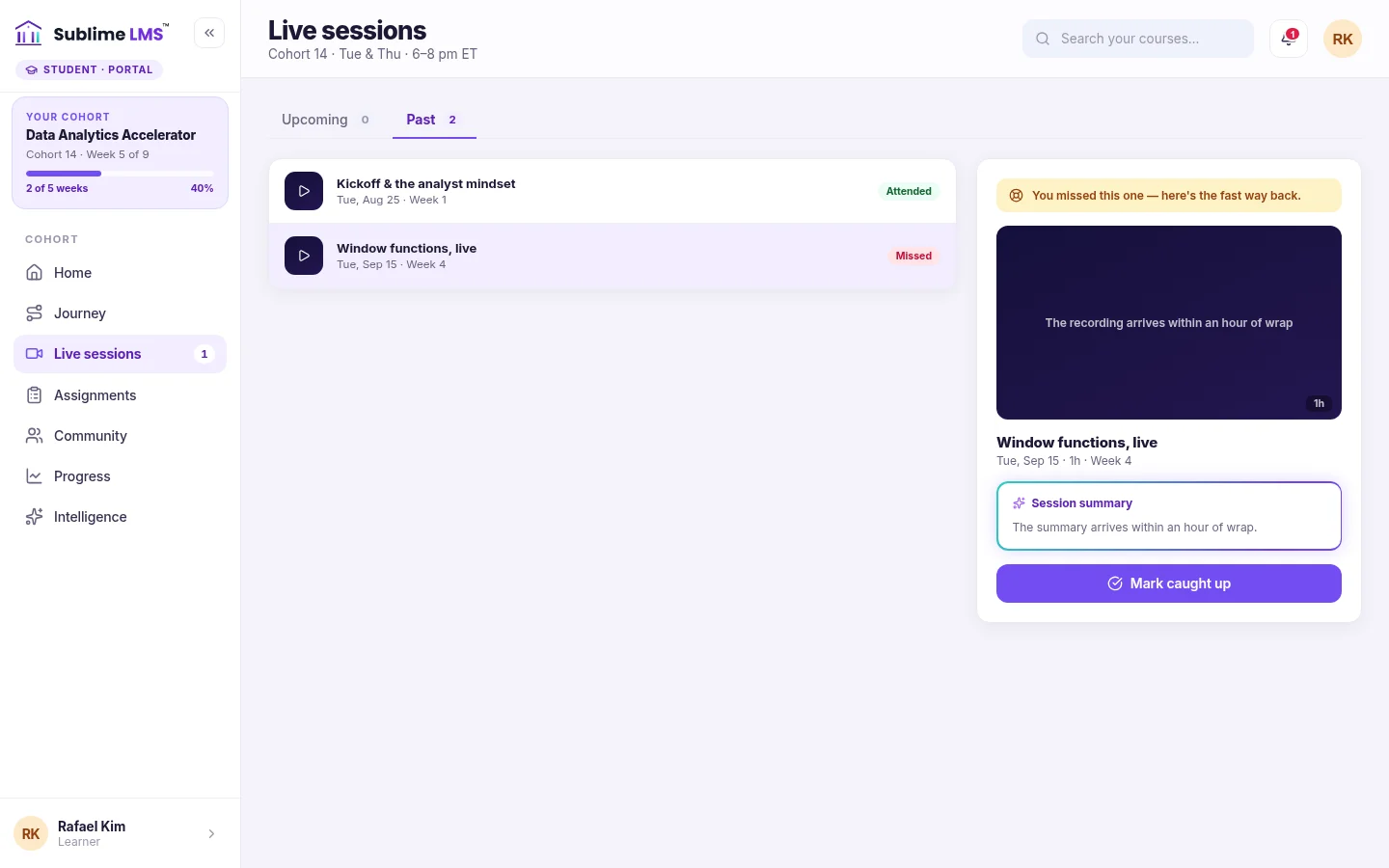
In Sublime LMS, once an administrator records attendance, a learner who wasn't there sees the session as missed. The recording stays on their Live sessions page and they can mark it caught up after watching, so the gap closes quietly instead of growing.
Related feature: Recovery workflows
Keep the group small enough to notice Link to “Keep the group small enough to notice”
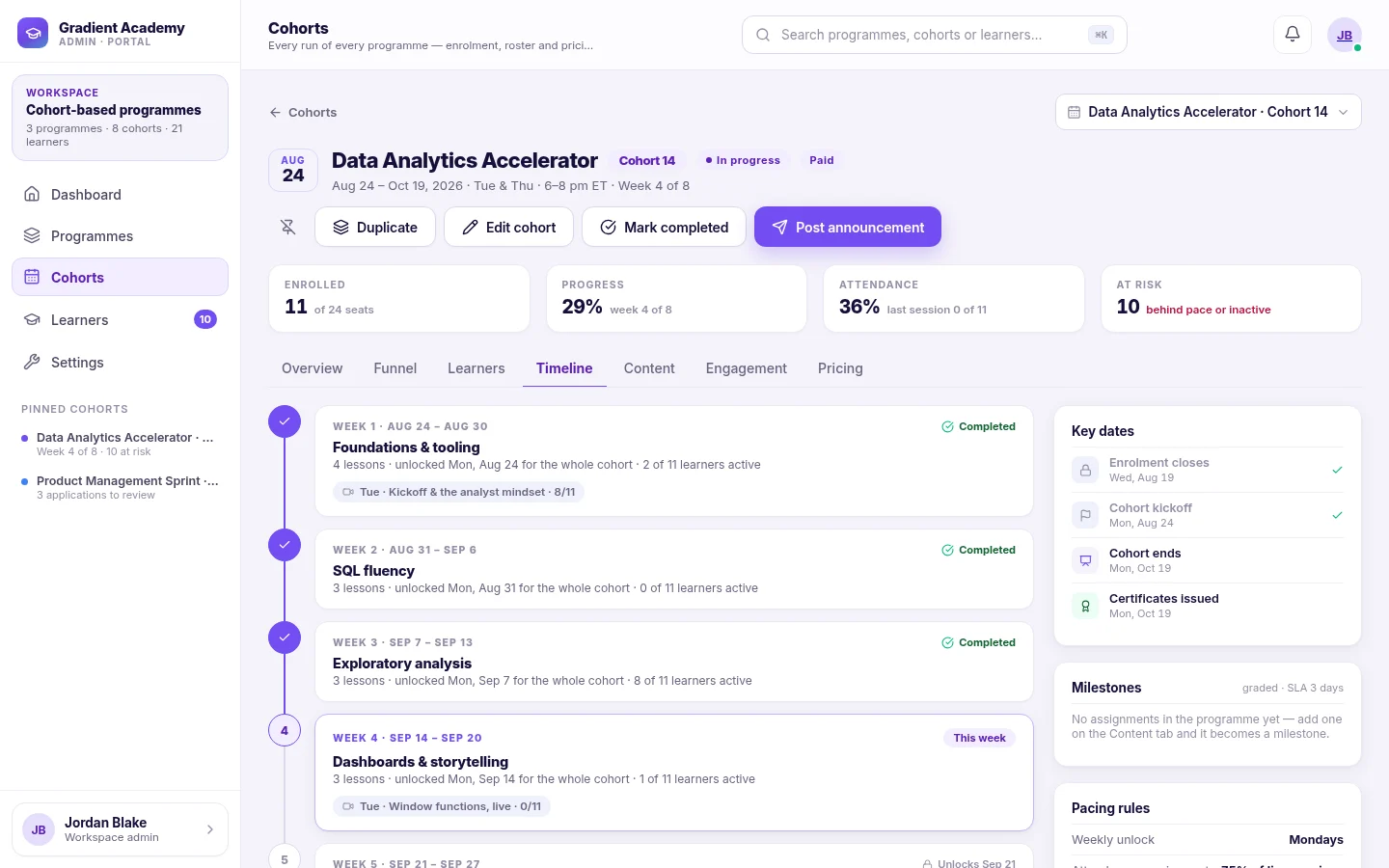
Accountability comes from being noticed. In a very large cohort, a learner who goes quiet is easy to miss, even with good tools. Cohort capacity in Sublime LMS is set per cohort, with an optional waitlist, so you can cap each intake at a size your team can actually follow and open another cohort when demand grows.
Related feature: Cohort management
Related articles
-
The case for a shared schedule
Flexibility sounds kind. For many learners, a schedule they share with a group is what turns "someday" into "this week". 2 min read -
What “at risk” should mean in a cohort program
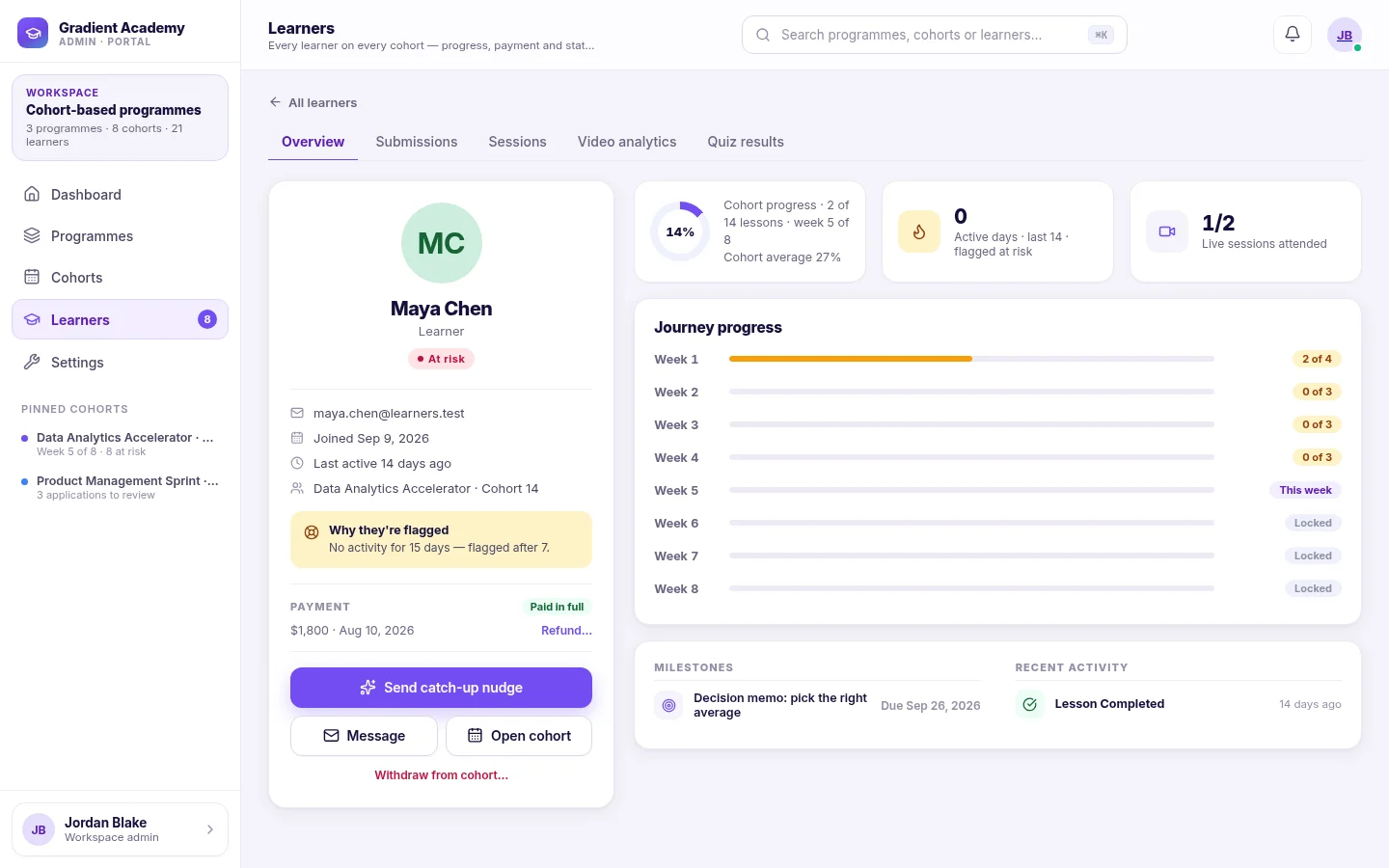
A risk flag is only useful if everyone agrees what it means and what happens next. Why a plain, explainable definition beats a clever score. 3 min read -
Recovery beats prevention: make coming back small
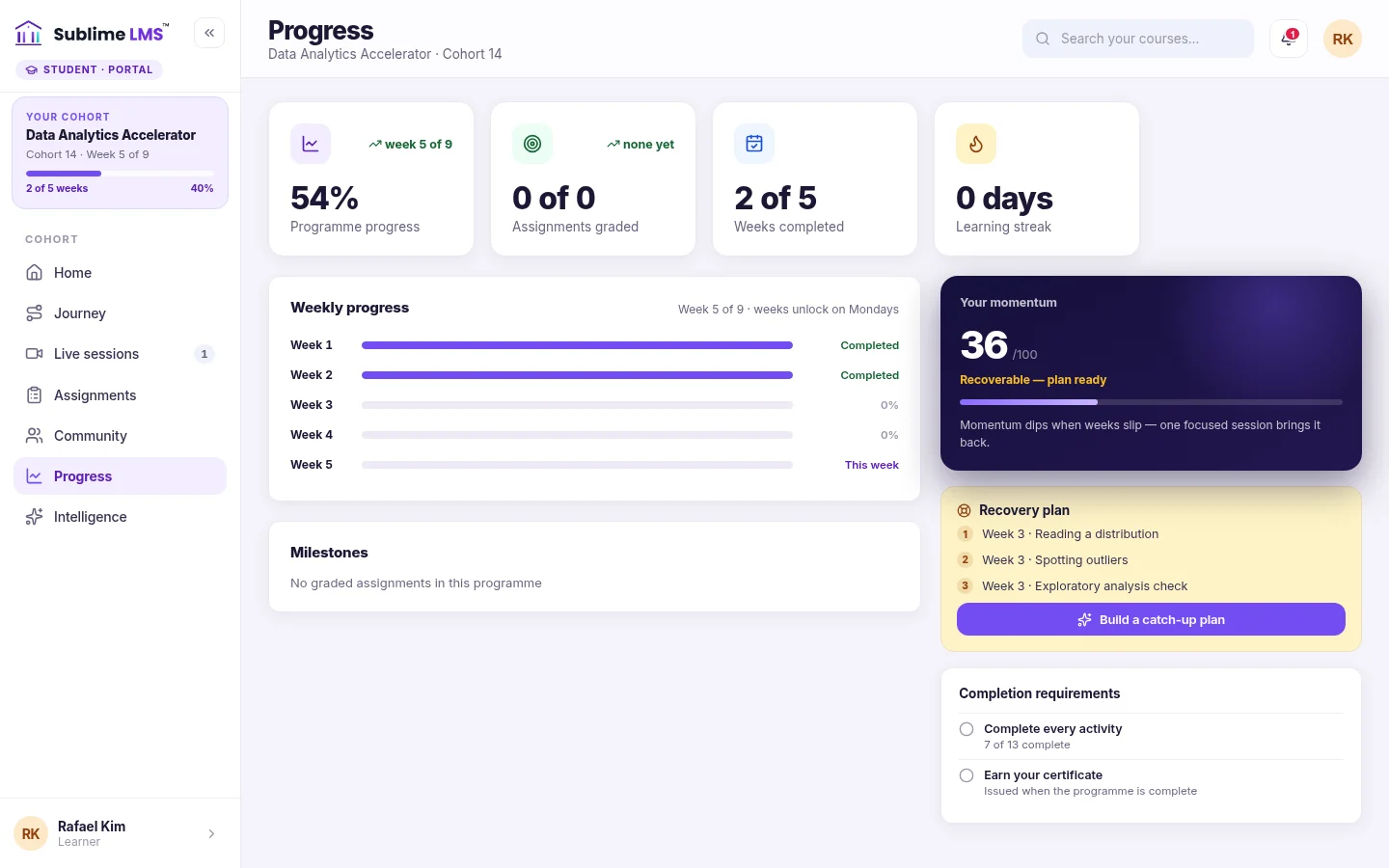
You can't stop every learner from having a bad week. You can make the way back short enough that they take it. 2 min read